According to VietnamPlus (17 November 2026), Vietnam’s textile and garment enterprises are intensifying efforts to achieve national export targets while preserving employment stability. Facing mounting global economic uncertainty — including shifting demand patterns, supply chain recalibrations, and financing pressures — industry stakeholders are adopting a range of coordinated operational and policy-aligned responses. A central focus remains the protection of workers’ incomes and job continuity across manufacturing hubs.
What this means for international shippers
Exporters and logistics partners supporting Vietnam’s textile-garment supply chain may encounter adjustments in shipment volumes, documentation timelines, or factory readiness windows. Proactive coordination with suppliers becomes especially important during periods of strategic recalibration.
Key questions to consider
- Are your current lead times aligned with potential shifts in factory output scheduling?
- Have you confirmed documentation requirements — such as certificates of origin or phytosanitary certifications — for textile shipments departing Vietnam?
- Is your carrier network prepared for possible fluctuations in container availability or inland transport capacity near key industrial zones like Ho Chi Minh City or Hai Phong?
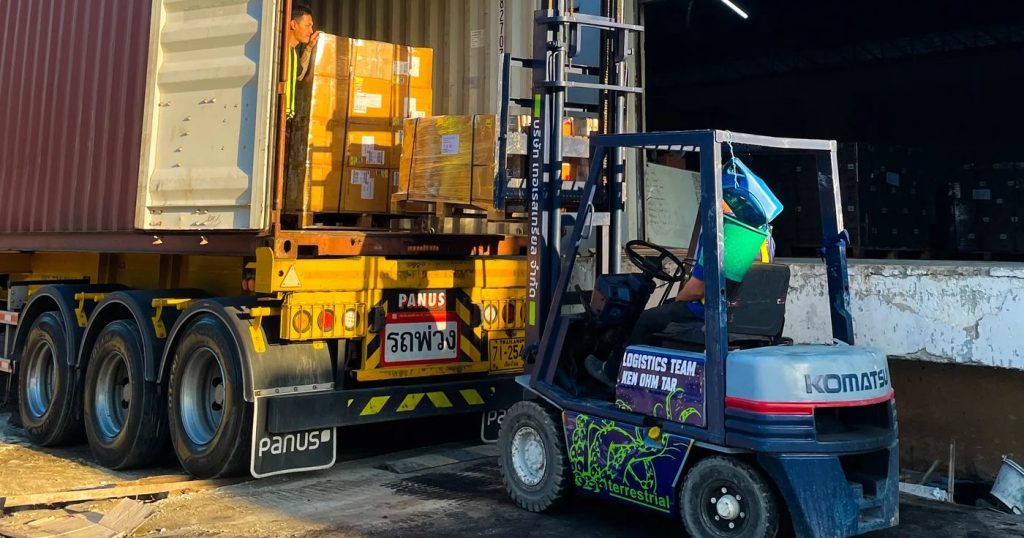
Image: Topic illustration photograph. Goterrestrial; CC BY 4.0; Cropped to show the container loading operation, resized and converted to WebP. No generated elements. · Source · License · Cropped and resized.